
NEWS
Mrs Aissatou Diouf: The African Boardroom Executive Redefining Leadership Across Continents, Advocating For Female Gender Inclusivity

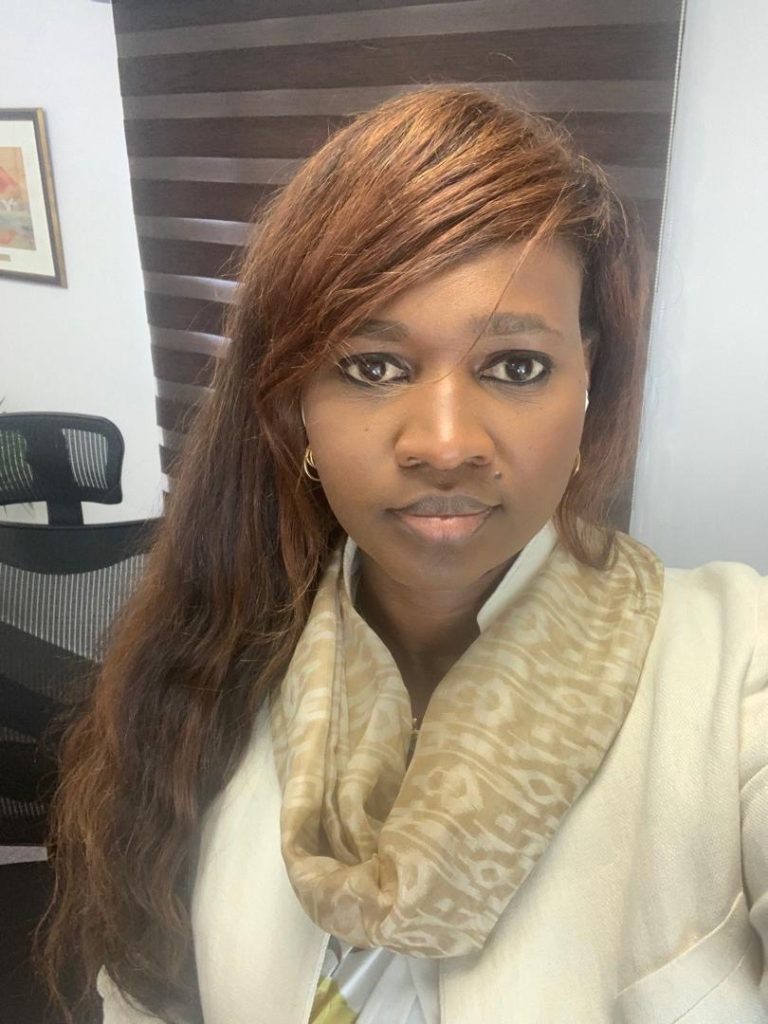
In an African business landscape where leadership is often measured by titles, corporate visibility and the size of the organisations one commands, Aissatou Diouf offers a different definition of influence.
For the General Manager of Suzuki in Nigeria, leadership is less about occupying the biggest room and more about becoming the person people trust when the room becomes difficult.
That philosophy has been shaped by nearly three decades of working across Africa through different languages, cultures, industries, business environments and, at times, demanding corporate assignments where decisive action mattered more than comfort.
Her journey through several several African markets and presenrly cascading down to the Nigerian automotive industry is not simply a story of professional advancement, rather, it is a story of resilience, adaptability and the quiet accumulation of credibility.
It is also the story of a woman determined to demonstrate that African leadership need not be confined by a particular gender domination geography, language or traditional expectations.
A Career Forged Across Africa
Aissatou Diouf’s professional journey has taken her through Senegal, Mali, Algeria, Burkina Faso, Liberia, Benin and Nigeria, exposing her to the realities of both Francophone and Anglophone business environments.
Her academic foundation, strengthened by an MBA from Paris Dauphine University complemented years of hands-on corporate experience.
But qualifications alone do not explain her rise.
Some of her most formative assignments were the difficult ones, or rather the corporate equivalent of being called in when a business needed stabilisation, transformation or a fresh direction.
She describes these experiences as “firefighter” assignments: situations that demanded calm judgement, operational discipline and the ability to make decisions under pressure.
Those experiences became an unconventional leadership school.
“Leadership is not built all at once, rather it is built one hard decision at a time,” she reflects. That philosophy has remained central to her career.
From Managing Numbers to Managing Transformation
Although her career began in finance, Diouf quickly discovered that figures alone cannot transform an organisation.
Finance can reveal where a company stands. Strategy can indicate where it should go. But it is people who ultimately determine whether transformation succeeds.
Her professional experience has therefore expanded beyond finance into commercial strategy, technology, systems integration, business development, market expansion, industrial operations, mergers and organisational turnarounds.
For her, the lesson is straightforward: departments cannot operate as isolated islands.
The strongest organisations, she argues, emerge when finance, operations, technology and commercial strategy become part of one coherent leadership agenda.
This approach has become particularly relevant in an automotive industry undergoing rapid change, where technology, mobility, financing, customer expectations and new vehicle brands are reshaping traditional business models.
Nigeria: A Different Kind of Leadership Classroom
Leading a business in Nigeria has provided another dimension to Diouf’s African experience.
Nigeria is Africa’s largest economy and one of its most complex markets. Its scale, entrepreneurial energy and diversity require executives to combine strategic thinking with adaptability.
For Diouf, the Nigerian experience has reinforced an important lesson which is that, there is no single formula for leading across Africa.
“What I eventually understood is that multicultural leadership isn’t about treating everyone identically. It’s about figuring out what actually motivates different people and aligning that behind a shared purpose”.
It is a principle born from .
What works in Senegal may not work in Mali. The dynamics of Algeria differ from Burkina Faso. And Nigeria demands its own leadership language.
Yet beneath those differences, she believes certain values remain universal: clarity, integrity, accountability, empathy and follow-through.
Those, she says, travel well across borders.
A Woman in Rooms Traditionally Dominated by Men
For much of her career, Diouf has found herself among predominantly male executive circles.
But she refuses to define her professional identity simply by being a woman who succeeded in a male-dominated environment.
“For many years, I was often the only woman in the boardroom,” she says. “But that was never what defined the work. The results were”.
That distinction captures much of her leadership philosophy.
She is passionate about expanding opportunities for women, particularly in technical and traditionally male-dominated professions, but her approach is practical rather than ideological.
She believes women need greater visibility, education, confidence and access to networks that can open doors.
“Women do not have enough confidence in themselves. This is partly due to the weight of culture. We need role models and support.”
For Diouf, the objective is not to create symbolic representation. It is to create genuine competence and opportunity.
She is particularly proud of initiatives she has championed to encourage women into automotive technical professions, where young women have historically struggled to find role models.
Watching women develop the confidence to enter unfamiliar professional territory, she says, remains one of the most rewarding dimensions of leadership.
The Power of Networks
If competence built the foundation of Diouf’s career, relationships helped expand its reach.
She understands that business leadership extends beyond formal boardrooms.
Executive forums, professional networks, social circles and informal conversations can create opportunities long before an official meeting takes place.
Even golf, which she embraces as both recreation and a networking environment, has reinforced lessons about patience, discipline, strategic thinking and maintaining composure.
Her philosophy of networking, however, is not transactional.
Influence, in her view, is earned gradually through trust, character, consistency and keeping one’s word.
That philosophy has helped her navigate business environments in which she was often an outsider by language, gender or nationality.
Rather than seeing difference as a barrier, she turned it into an advantage.
Building a Bridge Between Two Africas
Perhaps the most ambitious element of Diouf’s vision extends beyond her responsibilities. She wants to help build stronger commercial bridges between Francophone and Anglophone Africa.
With decades of experience navigating both worlds, she believes Africa’s linguistic divisions sometimes obscure enormous opportunities.
Nigeria, she observes, is an economic giant whose opportunities remain insufficiently understood in some Francophone markets. At the same time, Anglophone investors can overlook possibilities in Francophone Africa.
Her ambition is therefore to become a bridge-builder and helping businesses understand one another, navigate cultural differences and discover opportunities beyond their traditional markets.
“Africa is young and full of opportunities. But to seize them, you need to be willing to step outside your linguistic and cultural comfort zone”.
It is a statement that perhaps best captures her own career. She has spent much of her professional life doing exactly that.
Mrs Aissatou Diouf’s can beat be summarized under her pragmatic indices female management qualities key the following key specificities.
- High emotional intelligence and her ability to read people, understand dynamics and adapt communication.
- Inclusive leadership with stronger tendency to involve teams, encourage collaboration and create ownership.
- People development that brings out the best coaching qualities out of her, mentoring and identifying individual potential.
- Her resilience and adaptability particularly important in complex, multicultural and changing environments
- Collaborative but decisive leadership skills by listening broadly while ultimately taking responsibility for decisions.
- Authentic authority of combining performance expectations with humanity rather than relying solely on hierarchy.
Aissatou Diouf possesses multicultural leadership particularly valuable for regional African or international roles.
She is perceived in many circles as someone with a role-model impact on female executives can have an additional impact through visibility, sponsorship and opening pathways for other women.
Recognition for a Journey of Impact
Her achievements have also attracted recognition.
Diouf was honoured with the Distinguished Auto Personality of the Year Award at the 2024
Nigeria Transport Awards, a distinction that reflected her growing profile within Nigeria’s mobility and automotive ecosystem.
Yet even at moments of recognition, she prefers to direct attention away from herself and toward the people around her with focus of the youthful generation and the female gender being a priority.
“This award is not a personal recognition, but rather a recognition of the collective success of our entire Suzuki by CFAO team.”
That response is revealing.
For Diouf, leadership is not an individual performance. It is the capacity to create an environment where teams can deliver results.
Her Message to Africa’s Young Generation
After almost three decades across African markets, Diouf’s advice to young professionals is refreshingly direct; get educated, work hard, be willing to enter unfamiliar territory and never allow circumstances to define the boundaries of ambition.
Her philosophy is that success must be continually re-assessed, careers, like businesses, require direction, adaptation and the courage to change course when circumstances demand it.
She also believes young Africans must resist the temptation to measure achievement purely through titles. The more important question, she suggests, is whether one’s work creates value.
That philosophy is particularly relevant to Africa’s rapidly expanding young population, which faces an economy being reshaped by technology, entrepreneurship, artificial intelligence, regional integration and new forms of mobility.
The Next Chapter of African Leadership
Africa is entering a period in which leadership will increasingly require people who can operate across disciplines and borders.
Executives will need to understand technology without losing sight of people, finance without losing sight of purpose, and local realities without losing the regional picture.
Diouf’s career has effectively become a case study in that kind of leadership.
Her experience suggests that the strongest African executives of the future may not necessarily be those who remain within one market or one professional discipline.
They may be those capable of moving comfortably between cultures, languages and industries while retaining a clear sense of purpose.
For Mrs Aissatou Diouf, women have an important role to play in that future, not because organisations should appoint women simply to meet a numerical target, but because Africa needs the strongest available talent.
“Women have an essential role to play in shaping what comes next not because organisations need more women at the table for its own sake, but because Africa deserves the best leadership it can get”.
A Different Definition of Power
There is something striking about Aïssatou Diouf’s leadership philosophy.
It is ambitious without being loud. It is strategic without being theatrical.
And it places influence not in authority alone, but in trust. Her story demonstrates that power in modern African business can be built quietly through competence, resilience, relationships, execution and the ability to make people better.
At Suzuki, she leads a business. Across Africa, however, her larger contribution may prove to be the bridges she builds: between markets, between languages, between generations and between women and opportunities that were once considered beyond their reach.
After nearly three decades of crossing borders, Diouf’s most important lesson may be the simplest.
Leadership is not about being the only woman in the room. It is about becoming the person the room trusts to lead.
And when competence, courage, integrity and purpose become louder than stereotypes, leadership ceases to be about gender.
It becomes about impact; and that is this female genius has brought to every corporate organizations she had found herself. Her story is that of creating value, making impacts and bringing out the best out of the female gender.
-

 Car News6 years ago
Polestar is recalls over 2000 electric cars due to software bug
-

 AVIATION6 years ago
Photo News: Air Peace commence flight operations to South Africa
-

 Technology6 years ago
Common mistakes in CO₂ emissions calculations
-

 RAIL5 years ago
36 Killed in Pakistan Train Accident
-

 Reviews6 years ago
Ferrari Portofino Specifications and Review
-
AVIATION6 years ago
Why are aircraft pulled by Tow trucks before takeoff
-

 NEWS5 years ago
FG To Spend ₦900 Billion On Fuel Subsidy In 2022
-

 Business6 years ago
2016 Volvo XC60 review and specifications